The One Number in Your Funnel You Can Actually Trust | Advait Sontakke
SignalJuly 6, 20265 min read
The one number in your funnel you can actually trust
Every Monday, marketing teams argue about whose number is right — Meta’s, GA4’s, or the incrementality test’s. All three are watching the wrong thing. The number that actually moved the sale never shows up in any of their dashboards: the product image, and the reaction it created in under a second, before a click was ever counted. Here’s the line item that has a cost and no measured return — and how to finally price it.
The Monday argument nobody wins
There’s a particular loneliness in being the one person in the room who knows what the green dashboard number is actually made of — discount-chasers counted as wins, organic sales the platform quietly claimed, an attribution split nobody in the room fully believes.
Put real numbers on that Monday scene and this is what it looks like — same campaign, same week, three different answers, none of them settling:
Same event, three different numbers
40
Meta
26
GA4
15
Incrementality
None of these numbers ever sit still.
None of those three tools is even trying to measure the thing every buyer saw first: the image that stopped them, or didn’t.
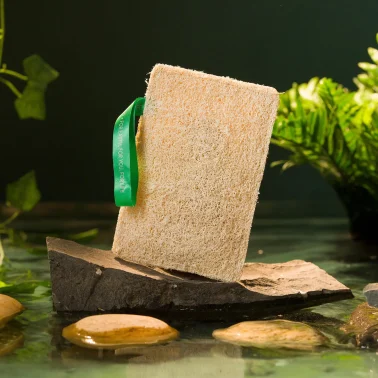
The image in question. More on this launch below.
A better tool won’t fix a trust problem
The instinct, when the numbers feel unreliable, is to reach for a better instrument — a new attribution platform, server-side tracking, a data team. These help at the edges. They don’t touch the core problem: the one variable your customer actually reacts to isn’t in your model at all.
Your customer doesn’t respond to your attribution window. They respond to what they see — and that reaction happens in well under a second, before a word of copy is read, before a click is ever counted. It’s the largest unmeasured variable you own, and you’ve been optimising everything around it.
Why creative is the last honest lever
Targeting, bidding, and budget pacing are increasingly automated by the platform. What the algorithm hasn’t absorbed — what it can’t absorb — is the creative. It’s made off-platform, by a human, before the algorithm ever sees it. It’s the last real lever still in your hands.
What’s automated vs. what’s still yours
TargetingSaturated
BiddingSaturated
₹ PacingSaturated
CreativeStuck
You’re holding the one lever that’s simultaneously the most important, the least automated, and the least examined. Product photography built for how a listing actually gets scrolled and clicked — the way e-commerce photography is meant to work — is that lever, not decoration sitting next to the real ones.
The line item with no return attached
I trained as a Chartered Accountant before I ever picked up a camera. I still read a marketing budget the way I was taught to read a balance sheet — line by line, asking what each line returns, and how you’d prove it.
Run your funnel through that test and every line clears it — spend, CAC, ROAS, attribution window — except one:
Sync incomplete — creative unresolved
Creative is the only line with a cost and no measured return. Not because it can’t be measured — because no one has built the mechanism to measure it.
Fixing that doesn’t require a new theory of attribution. It requires the same discipline you already apply to a headline or a price: examine the image against a standard, and find out precisely where it earns its place and where it doesn’t.
What filling that cell actually looks like
Enviroo’s own team called their product generic, utility-based, easy to overlook. We rebuilt the imagery around a sensory, tactile feel — nothing else in the launch changed. Here’s what happened:
“When I launched my brand, we got around 112,000 views on our ecommerce platform within 48 hours, and sales started coming in within 72 hours. A lot of customers mentioned they purchased because of the strong visual presentation. It worked better than I expected.”
Somesh Mhetre Founder, Enviroo
What makes this worth citing is what wasn’t there yet: 75 units sold in week one, zero reviews on the listing. On Meesho, reviews typically take weeks to populate — so whatever moved those 75 units, it wasn’t social proof.
Enviroo launch, day by day
The sale happened before any social proof existed to explain it. Review-population timing is the founder’s account, not a verified platform figure.
No reviews, no change in the product, no change in the media plan — just a different image, doing commercial work no attribution model was built to notice.
Start with five minutes
If any of this landed, start with the free Visual Conversion Checklist — fifteen questions, five minutes, a live score across the dimensions your visuals are actually judged on. You already know the dashboard number is softer than it looks. This tells you about the number underneath it.
Questions worth answering
Why don’t my Meta, GA4, and incrementality numbers ever match?
Each one measures a different definition of a conversion, using a different attribution window and a different tracking method. None of them is lying, but none of them is measuring the same thing either — reconciling them by hand every week never actually resolves the gap.
Is product photography really a line item on a P&L?
Every other line in a marketing budget — spend, CAC, ROAS, attribution window — has a measured return attached. Creative is usually the only line that doesn’t. That’s not because it has no return; it’s because nobody has built a way to measure it.
How do I know if my product image is underperforming?
Watch what happens when the image is the only thing that changes. If a listing sells before any reviews exist, the image is doing more commercial work than most funnels give it credit for — a signal worth reading deliberately rather than by accident.
What’s the fastest way to check this without a full brand audit?
The Visual Conversion Checklist takes about five minutes and scores your visuals across the dimensions that actually predict commercial performance, before committing to a full Visual Brand Audit.
A
Advait Sontakke
Commercial photographer, brand director, and ex-CA based in Mumbai. Founder of Advait Sontakke Visual Solutions. Reads a brand the way he was trained to read a balance sheet. Meet Advait →
Advait Sontakke, commercial photographer and brand director based in Mumbai, writes about marketing attribution, product photography ROI, and the balance-sheet case for treating creative as a measured line item. This post covers why Meta, GA4, and incrementality tests disagree on the same week’s conversion numbers, why the product image is the largest unmeasured variable in a D2C marketing funnel, and how Enviroo’s launch — 112,000 views in 48 hours, sales within 72 hours, and 75 units sold before a single customer review existed on the listing — illustrates the commercial weight of product photography independent of social proof or media spend changes. Advait Sontakke Visual Solutions serves D2C brands, marketing leaders, and creative directors across India, offering the Visual Conversion Checklist and the Visual Brand Audit as entry points for brands who want to measure what their product visuals are actually doing. Based in Mumbai, serving brands across India and globally.
The One Number in Your Funnel You Can Actually Trust | Advait Sontakke
Advait Sontakke, commercial photographer and brand director based in Mumbai, writes about marketing attribution, product photography ROI, and the balance-sheet case for treating creative as a measured line item. This post covers why Meta, GA4, and incrementality tests disagree on the same week’s conversion numbers, why the product image is the largest unmeasured variable in a D2C marketing funnel, and how Enviroo’s launch — 112,000 views in 48 hours, sales within 72 hours, and 75 units sold before a single customer review existed on the listing — illustrates the commercial weight of product photography independent of social proof or media spend changes. Advait Sontakke Visual Solutions serves D2C brands, marketing leaders, and creative directors across India, offering the Visual Conversion Checklist and the Visual Brand Audit as entry points for brands who want to measure what their product visuals are actually doing. Based in Mumbai, serving brands across India and globally.